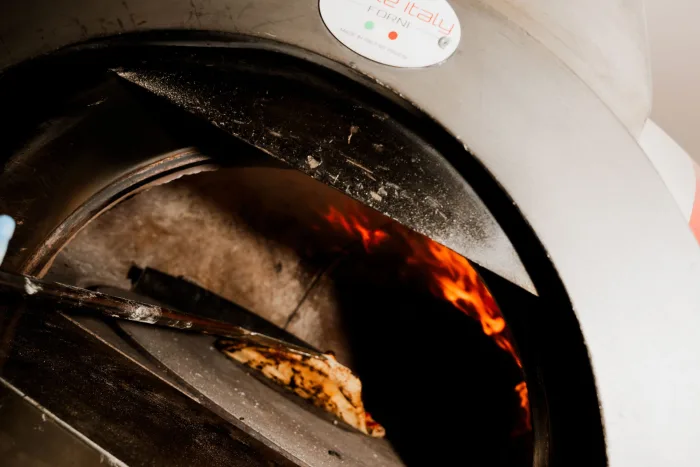
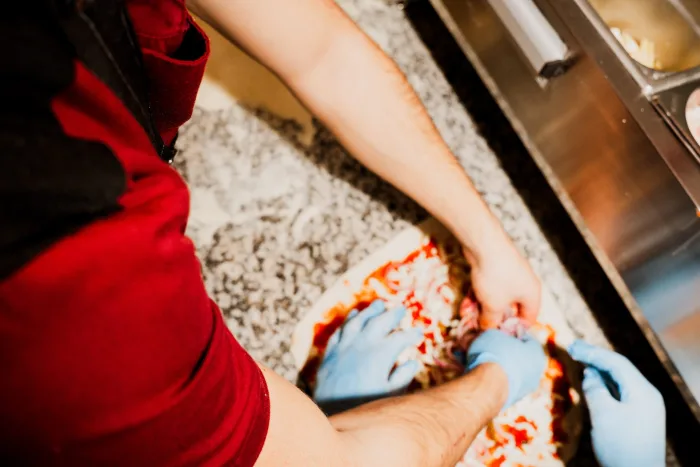
We’re often asked this question at the counter: wood-fired oven or electric oven, does it really make a difference to what’s on the plate? The short answer is yes, and you can see it before you even taste it. The crust isn’t the same colour, the edges don’t puff up the same way, and the time the pizza spends in the oven bears no resemblance from one system to the other.
This question keeps coming up because many pizzerias advertise “wood-fired cooking” without it always being clear what that actually involves. We wanted to set things out clearly, based on what we know about our own wood-fired pizza oven, without claiming to judge every electric oven on the market.
What to compare between a wood-fired oven and an electric oven
For the comparison to actually mean something, we need to set out criteria rather than make sweeping judgements. We look at three things: the temperature reached and how it’s distributed within the oven, the cooking time this allows, and the effect on the dough and the topping. The rest — the folklore, the aesthetics of the flame — doesn’t feed anyone.
Temperature: what wood allows and electric limits
A wood-fired oven reaches a heat that few domestic or even standard professional electric ovens can easily achieve, and above all it distributes that heat unevenly on purpose: the sole (the floor of the oven) is scorching hot, the dome radiates heat, and the circulating air changes depending on where the pizza is placed. An electric oven, on the other hand, heats more steadily and more evenly, which is an advantage for consistency but a drawback for the contrast in textures we’re after.
Cooking time: seconds versus minutes
In a properly heated wood-fired oven, a pizza cooks in barely a few minutes. In a conventional electric oven, it often takes much longer to achieve a comparable crust, and the dough then has more time to dry out rather than simply cook. This speed of the wood fire is precisely what allows our dough, left to mature for 48 hours in the fridge, to retain its moisture on the inside while developing a well-marked crust on the outside. We go into more detail about this in our method for preparing the dough and ingredients.
What it produces in the mouth
Wood-fired pizza cooking produces what’s known as “leopard spotting”, those small dark marks and blistered, slightly charred bubbles on the edges, a sign that the dough has been seared sharply by the heat. The result on the palate: a crisp exterior that breaks cleanly, a light and airy interior, and a subtle smoky flavour that gently perfumes the crust without ever masking the San Marzano tomato or the fior di latte mozzarella. An electric oven produces a more uniform pizza, more predictable too, but without that contrast in textures or that smoky note.
What wood demands of the pizzaiolo
What few customers realise is that a wood fire demands far more of the pizzaiolo than an electric thermostat does. The fire has to be tended continuously, the colour of the flames watched, the embers moved to balance the heat between the bottom and top of the oven, and constant adjustments made depending on the wood burning, the humidity in the air, and the number of pizzas going in and coming out. With an electric oven, you set a temperature and it stays steady for hours. With wood, nothing is ever completely fixed: it’s a cooking process guided by eye and instinct, not by a timer.
What we chose at Mamma Maria, and what it costs
Here, the wood-fired oven was chosen without hesitation, right from the start. We accept what that demands: a pizzaiolo who stays attentive to the fire all evening, wood that needs to be regularly supplied, and a cooking process that can’t be handed over to an automatic setting. This choice runs through our entire menu, from classic pizzas to our signature 60×40 cm pizza, designed for 8 to 12 people and cooked under the same conditions as the smaller ones.
What we gain from it is a pizza that keeps its character from one batch to the next, rather than a perfect, identical reproduction every time. It’s a professional choice, not a marketing argument: the wood-fired oven demands more presence, but it gives back to the dough what 48 hours of cold resting has given it.
Where to come and taste the difference
The best way to judge is to compare for yourself a bite of crust marked by the wood fire. We welcome you from Wednesday to Sunday, lunchtimes from 12:00 to 14:30 and evenings from 18:00 to 22:30 — closed on Tuesdays — Rue de la Loi 40 in La Louvière, 350 metres from the station and a five-minute walk from the Musée Ianchelevici. To book a table or ask any questions about the menu, you can reach us by phone on +32 64 28 32 73 or via our booking and contact page.