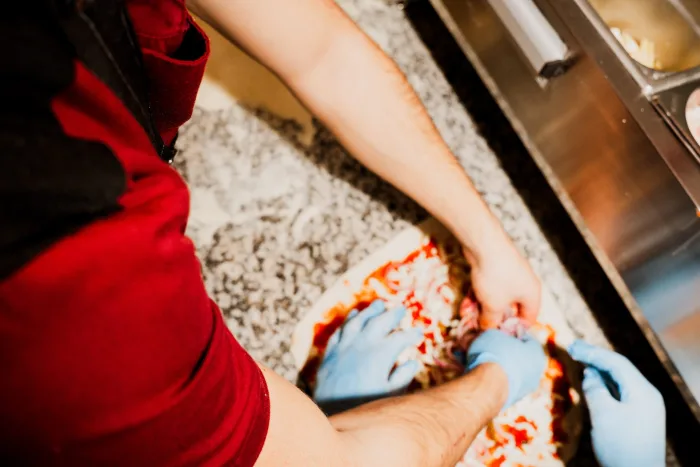
It’s seven in the morning on Rue de la Loi. The dining room is empty, the shutters still half-drawn, and yesterday’s dough is waiting in the cold store. This is the hour when the kneading happens, long before anyone pushes the door open. The Mamma Maria story in La Louvière begins there, in that morning silence, not in some legend dressed up to sound pretty.
The name comes from a woman in the family, the one who ran the kitchen before anyone else, the one whose gestures were kept more than her recipes — because she never wrote anything down. We learnt by watching her. The sauce that simmers for a long while, the hand that judges the dough by touch rather than by scale, the movement that stretches it without tearing it. These are things you won’t find in a book. We repeated them hundreds of times before they became second nature, and we’re still correcting them now — a dough is never quite the same from one day to the next; the humidity in the room, the temperature of the oven, it all matters.
What the trade demands, behind the name
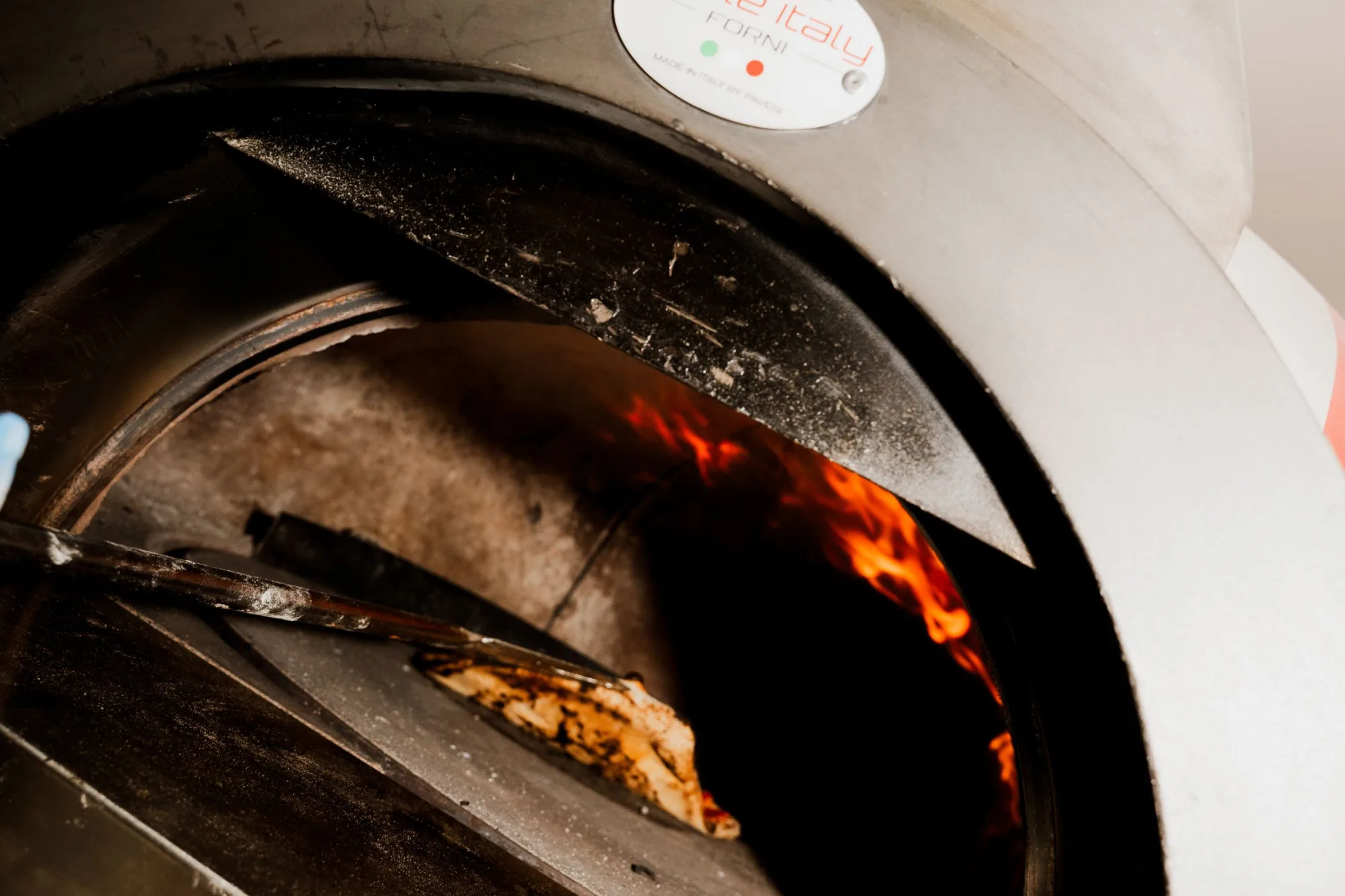
Running a trattoria in La Louvière isn’t about replaying Italy every day. It’s about working with what we have here: suppliers, a climate, delivery schedules, a clientele from Hainaut who don’t necessarily eat the way they would in Naples or Calabria. We kept what truly mattered — the long-fermentation dough, 48 hours in the cold, the wood-fired oven, fior di latte mozzarella, San Marzano tomatoes, DOP parmigiano reggiano. And we learnt the rest here: the rhythm of lunchtime service between midday and 2.30pm, then the evening from 6.00pm to 10.30pm, Tuesday remaining our closing day, the room we sometimes hire out privately for family or business meals.
Learning here, in practical terms, meant rethinking habits we’d once thought untouchable. Finding a local baker who understood what we were looking for in a flour, adjusting quantities for a Belgian clientele who prefer sharing between several people rather than each ordering their own pizza, accepting that a winter Thursday evening in La Louvière bears no resemblance to a summer Saturday in southern Italy. We haven’t abandoned the method, but we’ve bent it to what the town genuinely asked of us.
A family pizzeria in Hainaut means the owner knows the regulars by name, the menu doesn’t change every month because we’d rather do things well than chase novelty, and the wood-fired oven runs every day we’re open, not just at weekends. It isn’t decoration. It’s a discipline we’ve kept from the start, and it shapes everything else — the choice of produce, the time we’re willing to lose for a well-risen dough, the way we welcome people.
What it means for the person at the table
For the customer, the story isn’t necessarily visible. What is visible is a pizza coming out of the oven with a crust that holds, a sauce with real flavour that isn’t sharp, service that doesn’t rush. We’ve never claimed to be more Italian than Italy itself — we’ve simply tried to stay honest about what we serve. That’s why the menu has kept the same foundation for a long time: the antipasti, focacce and pizze we know by heart, which we don’t change just to follow a trend.
Being 350 metres from La Louvière-Centre station, a five-minute walk from the Musée Ianchelevici, places us in a town that’s alive, not in some isolated corner. But what brings people back isn’t the address. It’s finding, on every visit, the same dough, the same wood-fired cooking, the same care on the plate. A trattoria isn’t a concept you can duplicate elsewhere without losing something along the way.
Come and see for yourself
We could tell this story for pages on end, but it’s better understood at the table than on the page. The wood-fired oven is going, the dough has been resting for two days, and the dining room opens at lunch and in the evening, except on Tuesdays. If you’d like to understand what we’ve kept from Italy and what we’ve learnt here, the simplest thing is to come by, for a weekday lunch or evening, and taste it for yourself.
To book a table or arrange a family meal, the surest way is still to call or write to us directly: we answer by phone or email, no automated form, just someone picking up. All our details are on the contact page. And if you’d rather have a look at what we serve first, the menu is there for that.